
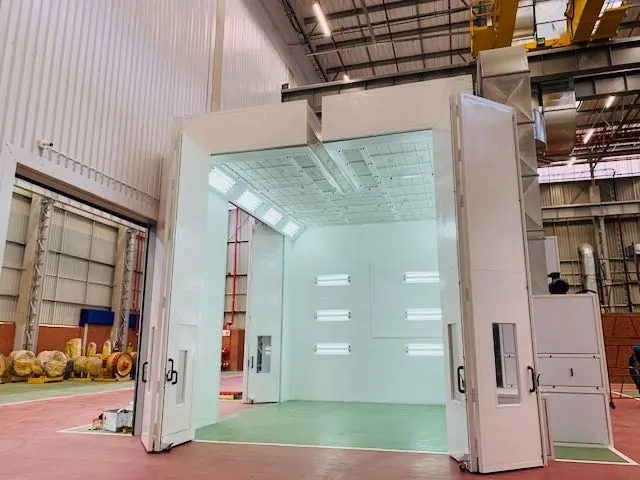
No two spray booths cost the same, because no two buyers paint the same thing in the same building. The price of a booth is set by a handful of decisions, and once you know them you can see where the money goes and where you can save.
1. Size, and especially height
Size drives the amount of panel, steel, filter media, lighting and airflow in the booth. Length adds cost in a straight line, but height and width add more than you expect: a taller booth needs more air to keep the same air speed over the work, so the fans, air units and heating all grow with it. Our standard TS 1 to TS 3 booths are 6.9 × 3.9 × 2.65 to 3.2 m inside. A booth for haul trucks or mining machines can be 20 m long and 8 m high or more, and is a different class of project.
Size the booth around the largest item you paint plus working space, not around the biggest booth the building can hold.
2. Airflow pattern
A cross-draft booth, with air entering at the doors and leaving through the back wall, is the most affordable layout. Downdraft booths cost more because they need a filtered ceiling, a raised base or pit with floor grids, and usually separate intake and extraction fans. They give a cleaner finish. See downdraft vs cross draft.
3. Heating and curing
An unheated extraction booth is the lowest-cost option and is fine for primers and enamels in a warm workshop. Adding heating means a burner and heat exchanger (diesel or gas), infrared panels or electric heaters, plus controls. Heating costs more up front but shortens drying and curing, so more jobs leave the booth each day. Waterborne paints need air movers or extra airflow to flash off quickly.
4. Filtration
Two filter stages is the entry level. Four stages, with intake pre-filters, a ceiling filter, a paint arrestor and secondary exhaust filters, cost more to build and to run, but give fewer dust nibs and a cleaner exhaust. See spray booth filters explained.
5. Doors, access and handling
Standard doors come with our standard booths. Roller doors, oversized openings, roof slots for an overhead crane, man-lift platforms, rail trolleys and column lifts are all extras that are priced to the job.
6. Ducting, building work and site conditions
The booth price is not the whole project. Exhaust ducting through the roof, any pit or concrete work for a downdraft floor, the electrical supply, and fuel supply for a burner all need to be allowed for. A site visit lets us confirm what your building already has.
7. Installation distance
Our own team installs, with specialist sub-contractors where needed. Installations far from Gauteng, or outside South Africa, add transport, travel and accommodation.
How to get an accurate quote
Send us the size of the largest item you paint, the space available (length, width and clear height to the roof), your paint system, how many jobs a day you need, and photos of the building. With that we can recommend a model and give you a firm price. Use the quote form, or start with the booth drawing on the home page to see which model fits your size.